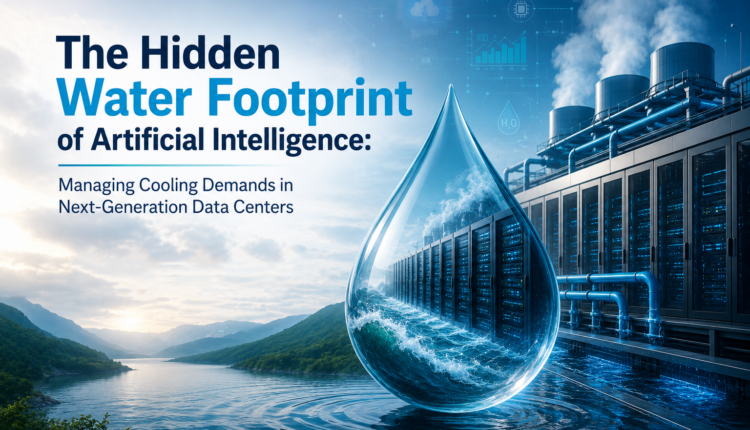
The Hidden Water Footprint of Artificial Intelligence: Managing Cooling Demands in Next-Generation Data Centers

The rapid advancement of artificial intelligence (AI) has accelerated the expansion of data center infrastructure worldwide. The computational requirements of AI applications, particularly large-scale machine learning and generative AI models, have significantly increased power densities within data centers, creating unprecedented cooling demands. As a result, water has become a critical resource for maintaining operational reliability and thermal efficiency. While water-based cooling systems offer substantial thermodynamic advantages over conventional air-cooling methods, their growing adoption raises concerns regarding water consumption, wastewater management, and long-term sustainability. Consequently, understanding the relationship between AI-driven digital infrastructure and water resource management has become essential for balancing technological growth with environmental stewardship.
Growth of AI Data Center Capacity
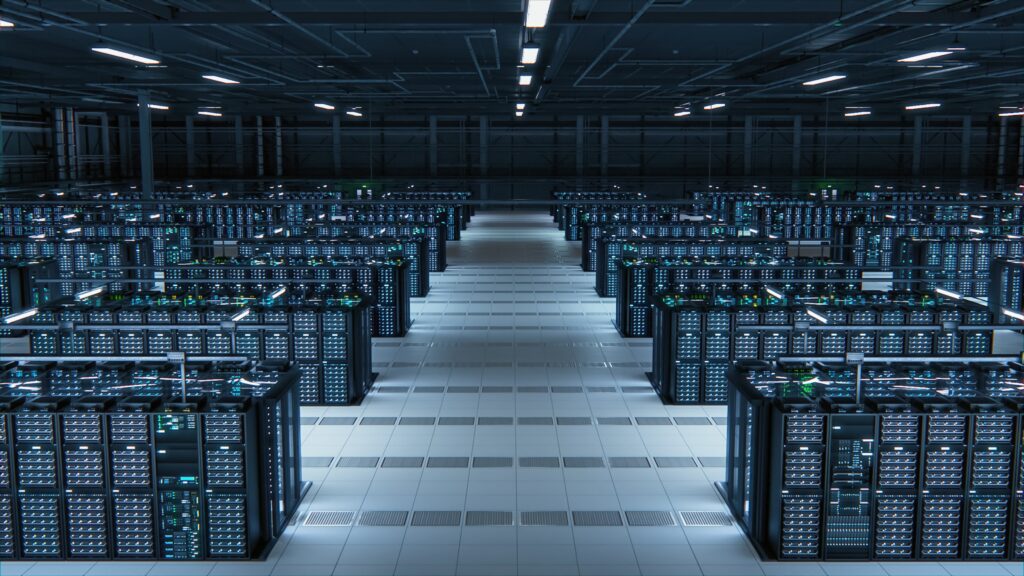
The development of AI technologies has fundamentally altered the scale of data center infrastructure. Historically, conventional data centers operated at relatively modest capacities, with average facility sizes measured in tens of megawatts. However, the increasing computational intensity of AI workloads has led to the emergence of significantly larger facilities, with planned capacities ranging from hundreds of megawatts to several gigawatts. This expansion reflects the substantial processing requirements associated with AI model training and inference. As AI adoption continues to grow across industries, data centers are expected to become increasingly important consumers of energy and water. Consequently, infrastructure planning must address not only electrical requirements but also sustainable water management strategies.
Thermal Management Requirements in AI Computing
One of the primary drivers of increased water demand in AI data centers is the dramatic rise in processor power consumption. Traditional central processing units (CPUs) typically operate within a power range of approximately 150–200 watts. In contrast, modern graphics processing units (GPUs) designed for AI applications may consume more than 1,200 watts per device. The resulting increase in rack power density generates heat loads that exceed the practical limits of conventional air-cooling systems. Under these conditions, liquid cooling technologies provide a more effective solution for heat removal. Direct-to-chip cooling and immersion cooling systems have therefore gained considerable attention as methods capable of supporting the thermal requirements of high-density AI computing environments.
Thermodynamic Benefits of Water-Based Cooling
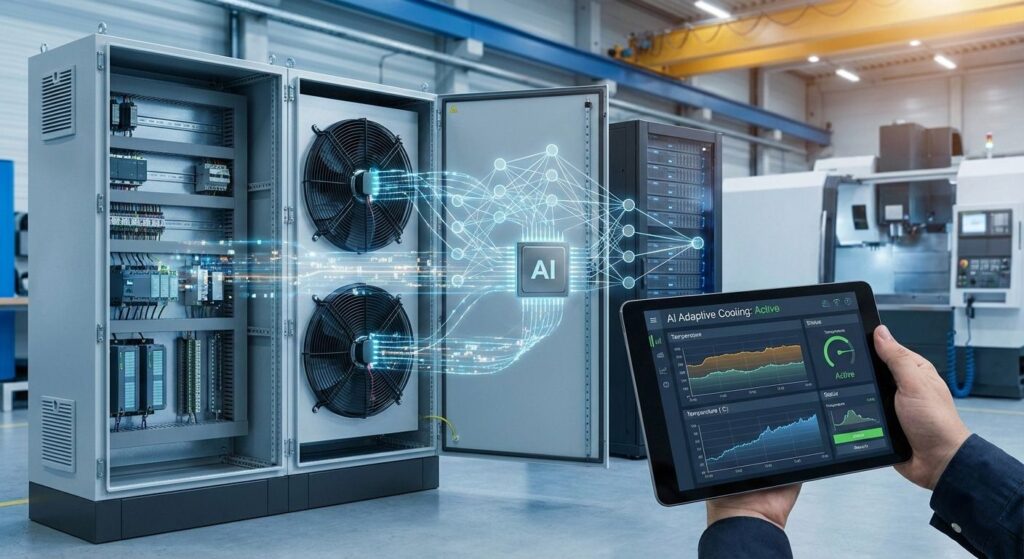
Water possesses several physical properties that make it particularly suitable for thermal management applications. Compared with air, water exhibits significantly higher heat capacity, density, and thermal conductivity. These characteristics enable water to absorb and transport substantially larger quantities of heat while requiring lower volumetric flow rates. The superior heat transfer performance of water allows cooling systems to maintain stable operating temperatures even under extreme computational loads. As AI processors continue to evolve toward higher power densities, the thermodynamic advantages of water are expected to reinforce its role as the dominant cooling medium within next-generation data centers.
Balancing Water Consumption and Energy Efficiency
The selection of a cooling strategy often involves balancing competing objectives related to water and energy use. Mechanical cooling systems can reduce direct water consumption; however, they generally require higher electricity inputs. Conversely, evaporative cooling systems improve energy efficiency by utilizing the latent heat of water evaporation but increase overall water demand. This relationship highlights the importance of evaluating both Water Usage Effectiveness (WUE) and Power Usage Effectiveness (PUE) when assessing data center sustainability. Optimizing one parameter may negatively affect the other, making integrated resource management essential for achieving long-term environmental performance.
Water Demand and Regional Resource Implications
As AI infrastructure expands, water demand is becoming an increasingly significant consideration for local communities and water utilities. Large-scale facilities may require thousands of cubic meters of water per day to support cooling operations. In regions already experiencing water stress, such demand can intensify competition for available resources. The challenge is particularly relevant in areas where population growth, industrial development, and climate variability are placing additional pressure on water supplies. Consequently, data center operators must evaluate local hydrological conditions and incorporate water resource considerations into site selection and facility design processes.
Alternative Water Sources for Cooling Applications
To reduce dependence on potable water supplies, many facilities are exploring the use of alternative water sources. Treated municipal wastewater, brackish groundwater, and industrial reuse streams represent potential options for cooling operations. The utilization of these sources can help preserve drinking water resources while supporting industrial water requirements. However, alternative water supplies frequently contain elevated concentrations of dissolved solids, hardness constituents, and biological contaminants. Effective pretreatment technologies are therefore required to ensure compatibility with cooling systems and to maintain operational reliability.
Concentrate Management & Water Recovery
A significant challenge associated with cooling tower operation is the generation of concentrated waste streams. As water evaporates, dissolved contaminants accumulate within the recirculating system, eventually requiring removal through blowdown processes. The disposal and treatment of these concentrated streams can represent a substantial operational and environmental burden. To address this issue, facilities are increasingly adopting advanced water recovery technologies aimed at maximizing reuse and minimizing wastewater generation. Higher recovery rates not only reduce freshwater demand but also decrease disposal requirements and associated costs.
Advanced Treatment Technologies
Recent developments in membrane-based treatment technologies have expanded opportunities for water recovery in industrial cooling applications. Reverse osmosis systems, enhanced fouling control mechanisms, and integrated crystallization processes are enabling facilities to achieve increasingly high recovery efficiencies. These technologies support the treatment of impaired water sources and the reduction of blowdown volumes, contributing to improved resource utilization. In addition, advanced treatment systems provide a pathway toward near-zero liquid discharge strategies that can further enhance water sustainability within large-scale AI infrastructure.
Conclusion
The expansion of AI data centers has established water management as a critical component of digital infrastructure sustainability. Increasing computational densities have intensified cooling requirements, reinforcing the importance of water-based thermal management systems. At the same time, concerns regarding water consumption, wastewater generation, and local resource availability necessitate the implementation of comprehensive water management strategies. Future progress will depend on the integration of efficient cooling technologies, alternative water sources, advanced treatment systems, and high-recovery processes. Through these approaches, AI data centers can improve operational performance while reducing their impact on water resources, supporting a more sustainable balance between technological advancement and environmental responsibility.
Discover More: https://mg.aquaenergyexpo.com/issue/

