
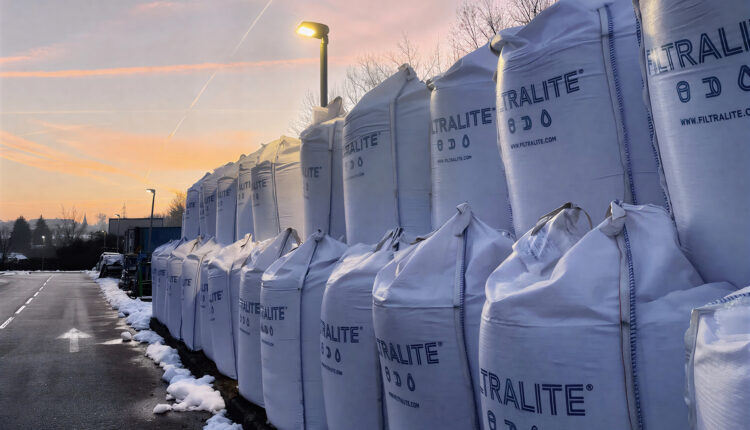
Elevating Pretreatment Performance with Filtralite®: A High‑Efficiency Media for Modern Desalination Challenges

Desalination and advanced water treatment plants face increasingly unstable feedwater conditions—fluctuating salinity, high suspended solids, tidal-driven variability, and sudden spikes in turbidity. These challenges put significant strain on ultrafiltration (UF) and reverse osmosis (RO) systems, accelerating fouling and raising operational costs.
In this environment, robust and reliable pretreatment becomes essential. Filtralite® provides a high-performance solution that stabilizes feedwater quality, protects membranes, and improves overall system efficiency.
About Filtralite®: High-Performance Expanded Clay Media
Filtralite® is engineered from lightweight expanded clay aggregates, offering:
- High porosity and macropore structure
- Higher filtration velocities vs. conventional sand/anthracite
- Reduced backwash frequency (2–4× fewer cycles)
- Improved removal of fine suspended solids
- Long media life and lower energy/water consumption
Its performance advantages make it an ideal media for desalination pretreatment, especially in high-variability environments.

Case Study: Beckton Desalination Plant, UK
-
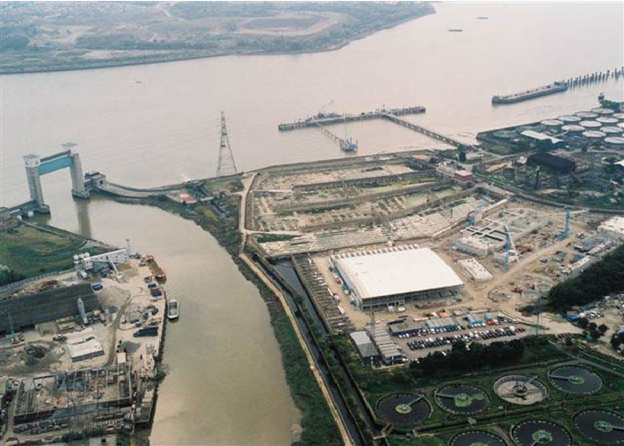
Background: A Highly Variable Estuarial Water Source
The Beckton desalination plant in the UK treats estuarial water with rapidly changing turbidity levels, suspended solids, and salinity driven by tidal conditions.
These fluctuations made it critical to develop a pretreatment solution that could protect the UF and RO stages reliably.
-
Pretreatment Configuration at Beckton
The pretreatment train consists of:
- Coagulation & Flocculation
- Clarification
- Pressure Filtration using Filtralite® Pure HC 0.8–1.6 mm
- Ultrafiltration
- Reverse Osmosis (RO)
Raw Water → Coagulation → Clarification → Filtralite® Pressure Filters → UF → RO → Product Water
-
Filtration System Details
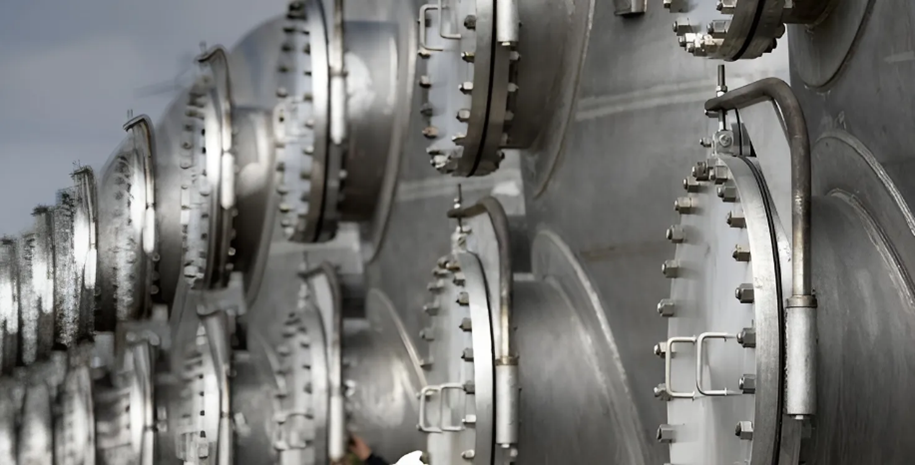
- 17 pressure filters
- 50 m² filtration area per filter
- Filtration velocity: 12 m/h
- Media used: Filtralite® Pure HC (0.8–1.6 mm)
-
Performance Results
The use of Filtralite® significantly improved pretreatment stability:
- Consistent turbidity reduction even during raw water fluctuations
- Stable UF membrane performance with reduced clogging
- Lower fouling rate for RO membranes
- Reduced backwash water and energy consumption
- High-quality filtrate meeting strict plant and regulatory standards
The plant achieves a production capacity of 150,000 m³/day, serving nearly 900,000 people.
-
Table: Performance Comparison
| Parameter | Conventional Media | Filtralite® | Improvement |
| Filtration rate | 6–8 m/h | 10–12 m/h | +50–70% |
| Backwash frequency | High | Low | 2–4× reduction |
| Fine particle removal | Moderate | High | Significant improvement |
| UF fouling | Frequent | Reduced | Lower OPEX |
Why Filtralite® Is Ideal for MENA Desalination Plants
Plants in the Middle East & North Africa can benefit from Filtralite® due to:
- Ability to handle high-turbidity or variable raw water
- Reduced operational cost through fewer backwashes
- Enhanced UF and RO membrane protection
- Upgrade potential for existing plants without new construction
- Lower carbon footprint and improved sustainability
Additional Insights: Operational & Sustainability Advantages
Filtralite® not only enhances filtration performance but also contributes directly to plant-wide efficiency goals. By reducing head loss development, operators can maintain longer filtration cycles without compromising effluent quality. This in turn minimizes backwash water usage, chemical consumption, and the energy footprint associated with pumping and treatment.
At facilities like Beckton, where environmental compliance and long-term operating stability are critical, these savings become significant. The lightweight nature of Filtralite® media also reduces strain on filter structures and lowers transportation emissions compared to heavier filtration materials. For large-scale desalination projects in coastal or estuarial regions, this translates into a more sustainable and economically viable operation.
Enhanced Applicability in Different Water Treatment Contexts
Filtralite® has proven versatile across multiple treatment configurations beyond desalination pretreatment. Its performance remains consistently strong in municipal drinking water production, industrial water recycling, and tertiary wastewater polishing. Plants dealing with highly variable turbidity—whether due to seasonal influences, industrial discharge, or algal blooms—benefit especially from Filtralite®’s stability and filtration efficiency.
These operational advantages have led to a growing adoption of Filtralite® in the Middle East, Europe, and Asia, where extreme raw water variability or regulatory standards demand robust solutions. In retrofitted facilities, switching from conventional media to Filtralite® often requires no structural modification, enabling plants to enhance capacity and performance using the same infrastructure.
Conclusion
Filtralite® enables desalination and water treatment plants to achieve stable, efficient, and high-quality pretreatment performance—even under challenging feedwater conditions. The Beckton case demonstrates how advanced media can transform plant reliability, reduce OPEX, and extend membrane life.
This makes Filtralite® a strategic, future-focused choice for pretreatment systems across the globe, especially in high-demand regions like the Middle East.
Mohammed Kastawy
Area Sales Manager – MENA Region
 Mobile: +971565503535
Email : mohammed.kastawy@saint-gobain.com
LinkedIn: www.linkedin.com

