

Artificial Intelligence: The Driving Force Behind Enhanced Water Resources Management in a Changing World

Artificial Intelligence (AI) is rapidly emerging as one of the most influential technologies shaping the future of water management. As water systems become increasingly complex and data-rich, utilities and water professionals are searching for smarter ways to transform information into actionable insights. AI offers a powerful opportunity to improve the way water resources are monitored, managed, and protected. By enhancing data analysis, supporting faster decision-making, and enabling more adaptive operational strategies, AI has the potential to strengthen both efficiency and resilience across the water sector. However, realizing these benefits requires careful consideration of governance, sustainability, and the broader implications of digital transformation.
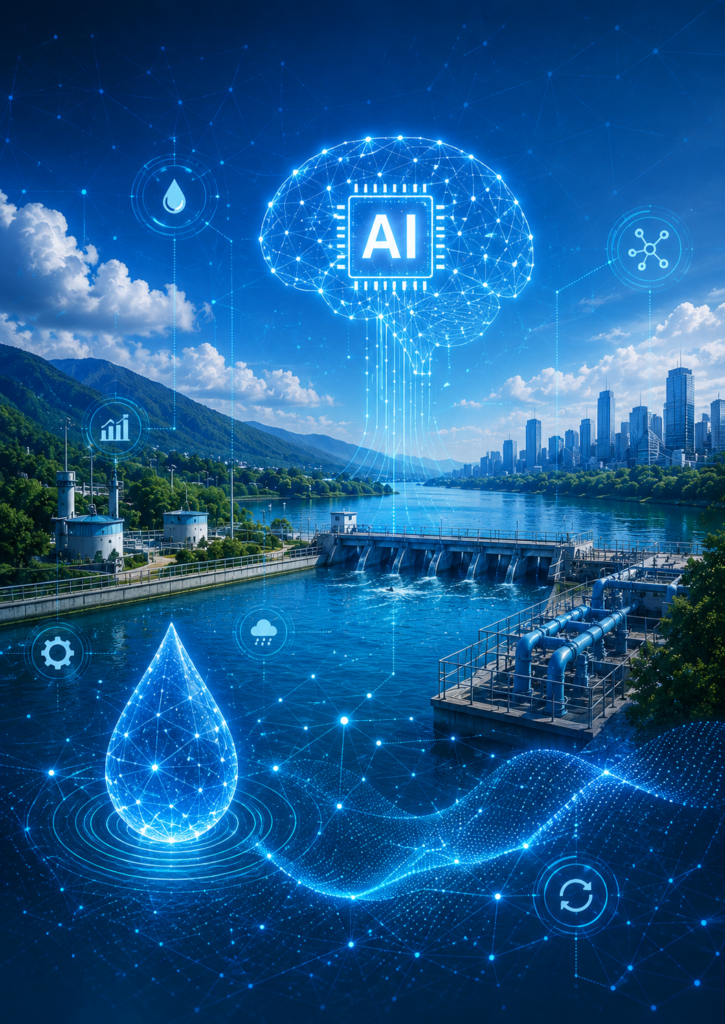
The Growing Importance of Data in Water Management
Modern water systems generate vast quantities of information from monitoring networks, operational processes, and management activities. While access to data has increased significantly, transforming that data into meaningful knowledge remains a challenge. AI provides new capabilities for processing large volumes of information and identifying patterns that may otherwise remain hidden. By converting raw data into useful insights, AI enables water professionals to better understand system performance and emerging trends. This improved understanding supports more informed planning and operational decisions. As data continues to play a central role in water management, AI is becoming an increasingly valuable tool for helping organizations navigate complexity and respond more effectively to changing conditions.

Accelerating Decision-Making Processes
Timely decision-making is essential in a sector where operational conditions can change rapidly. Traditional analytical approaches often require significant time and resources to interpret data and develop responses. AI offers the potential to accelerate these processes by quickly analyzing information and presenting relevant insights. Faster access to knowledge can improve operational responsiveness and strategic planning. Instead of relying solely on retrospective analysis, organizations can use AI-driven insights to support more proactive management approaches. This ability to move from data collection to decision-making more efficiently is one of the key advantages driving interest in AI across the water sector.
Building Adaptive Water Systems
Water systems operate within dynamic environmental, economic, and social contexts. Climate variability, population growth, and changing resource demands all require flexible management approaches. AI can contribute to the development of adaptive systems capable of responding more effectively to evolving circumstances. Through continuous analysis of available information, AI can help organizations identify emerging challenges and opportunities. This capability supports operational flexibility and allows managers to adjust strategies when conditions change. As uncertainty becomes an increasingly significant factor in water management, adaptability is likely to become a defining characteristic of successful water systems.
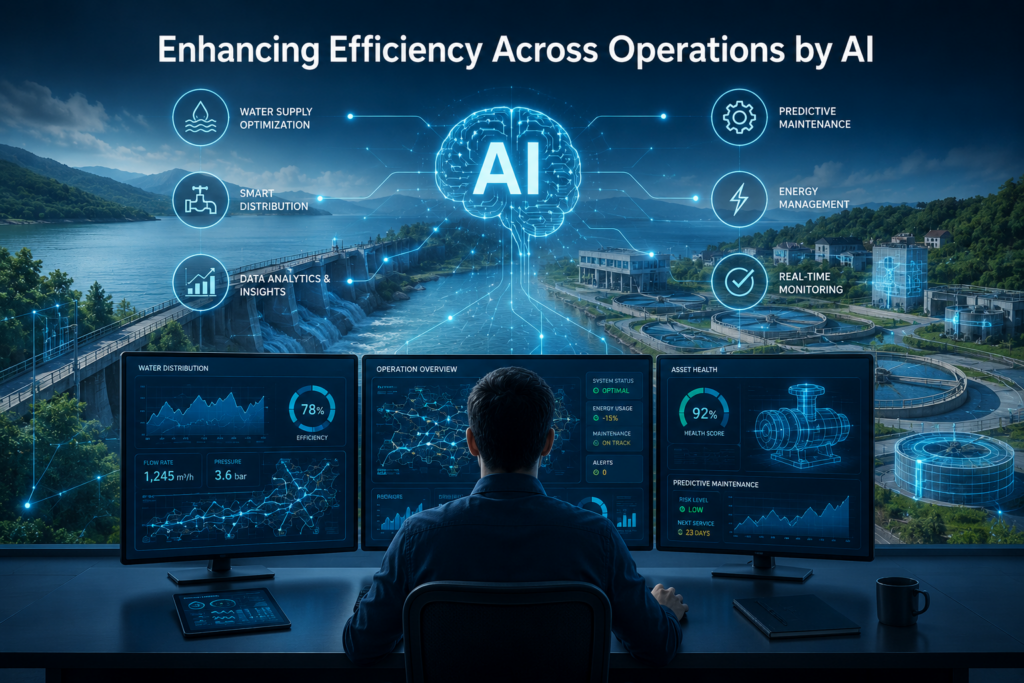
Enhancing Efficiency Across Operations
Efficiency remains a critical objective for water utilities and resource managers. AI has the potential to improve operational performance by helping organizations make better use of available information and resources. Smarter data analysis can support more targeted actions, reducing inefficiencies and improving overall system performance. The value of AI lies not only in automation but also in its ability to support better-informed decisions. By helping managers understand complex situations more quickly, AI can contribute to improved operational outcomes and more effective resource allocation. These benefits position AI as an important component of future water management strategies.
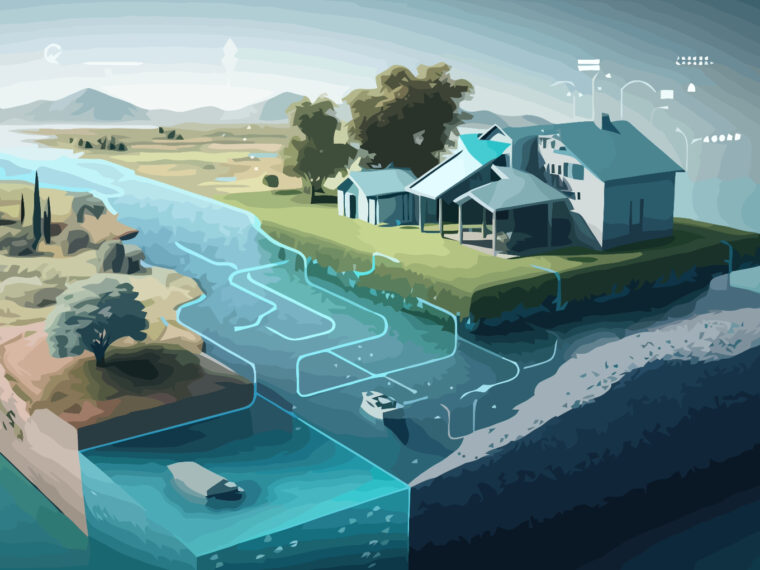
Strengthening Resilience in a Changing World
Resilience refers to the ability of water systems to withstand disruptions, adapt to challenges, and continue delivering essential services. As water managers face increasing uncertainty, resilience has become a central priority. AI can support this objective by improving situational awareness and enabling faster responses to emerging issues. Access to timely and reliable information allows organizations to anticipate challenges and evaluate potential responses more effectively. In this way, AI contributes not only to operational efficiency but also to the long-term capacity of water systems to manage risks and adapt to future pressures. Building resilient systems requires both technological innovation and informed decision-making, areas where AI can play an important role.
Governance and Sustainability Considerations
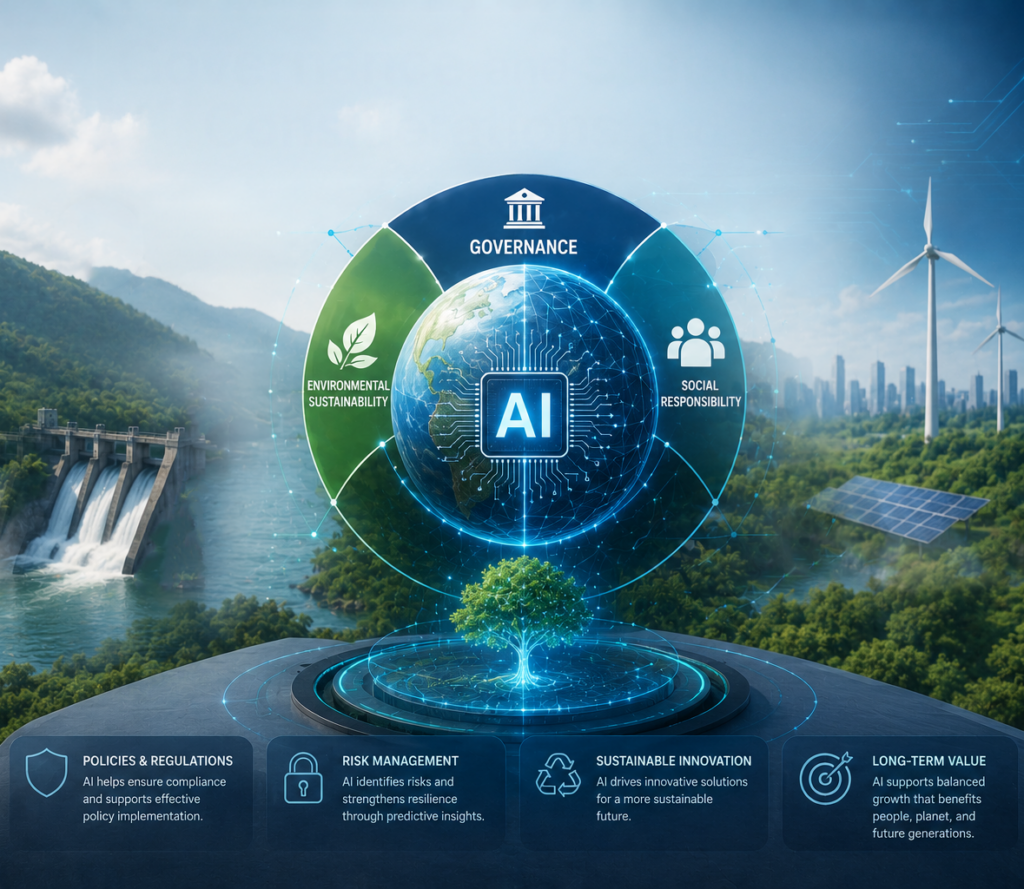
While AI presents significant opportunities, its adoption also raises important questions. Effective data governance is essential to ensure that information is managed responsibly and used appropriately. Organizations must establish clear frameworks for data quality, accessibility, and accountability. In addition, the expansion of digital technologies requires consideration of their broader environmental implications. The infrastructure supporting AI relies on energy and digital resources that carry sustainability considerations of their own. As the water sector embraces digital transformation, balancing innovation with responsible governance and environmental stewardship will be critical to achieving long-term benefits.
Conclusion
Artificial intelligence has the potential to become a transformative force within the water sector. From improving data analysis and accelerating decision-making to supporting adaptive, efficient, and resilient water systems, AI offers a wide range of opportunities for organizations seeking to enhance performance and sustainability. Yet technology alone is not enough. Successful implementation requires thoughtful governance, responsible data management, and a commitment to balancing innovation with environmental considerations. As digital transformation continues to reshape industries worldwide, the water sector has an opportunity to harness AI to strengthen resource management, improve service delivery, and contribute to a more sustainable & resilient future.
Discover More: https://mg.aquaenergyexpo.com/issue/

