
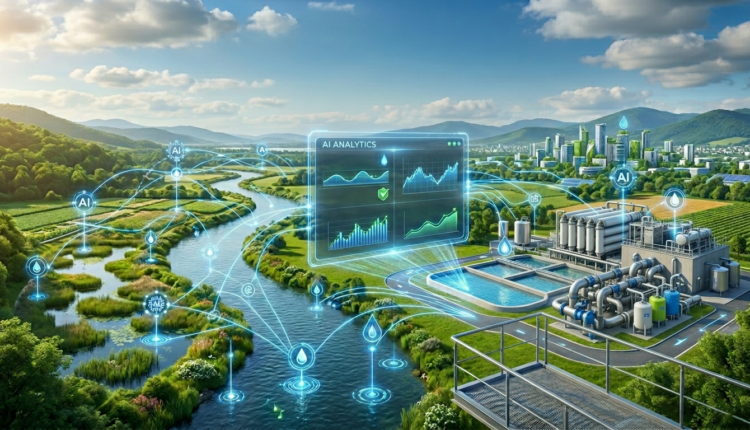
The Digital Revolution in Water Management: Leveraging AI for a Sustainable Future

Water is arguably our most critical global resource, essential for human health, economic development, and environmental sustainability. However, as cities, industries, and agricultural sectors compete for increasingly scarce water supplies, water professionals face unprecedented challenges in managing these demands effectively. To address these complexities, the water sector is undergoing a profound digital revolution. Driven by international frameworks and the pursuit of best practices, the industry is increasingly turning to Artificial Intelligence (AI) to foster innovation and deliver a more resilient water future.
The Digital Shift in the Water Sector
Historically, the water management industry has been viewed as slow to adopt new technological paradigms. Many professionals in instrumentation, control, and modeling once faced frustration when innovative ideas failed to transition into real-world practice. Today, however, that narrative has shifted significantly. We are currently witnessing a massive hype cycle and genuine implementation of digitalization. From utility boards and CEOs to municipal leaders, there is a clear mandate to digitize operations, with many utilities now appointing Chief Digital Officers to accelerate this transition.
The Data Pipeline: From Sensors to Actionable Insight
One of the fundamental pillars of AI in wastewater treatment is the data pipeline, a systematic approach to moving from raw data to understanding and, ultimately, decisive action. Wastewater treatment environments are notoriously harsh and nasty, which poses a unique challenge for sensor maintenance.
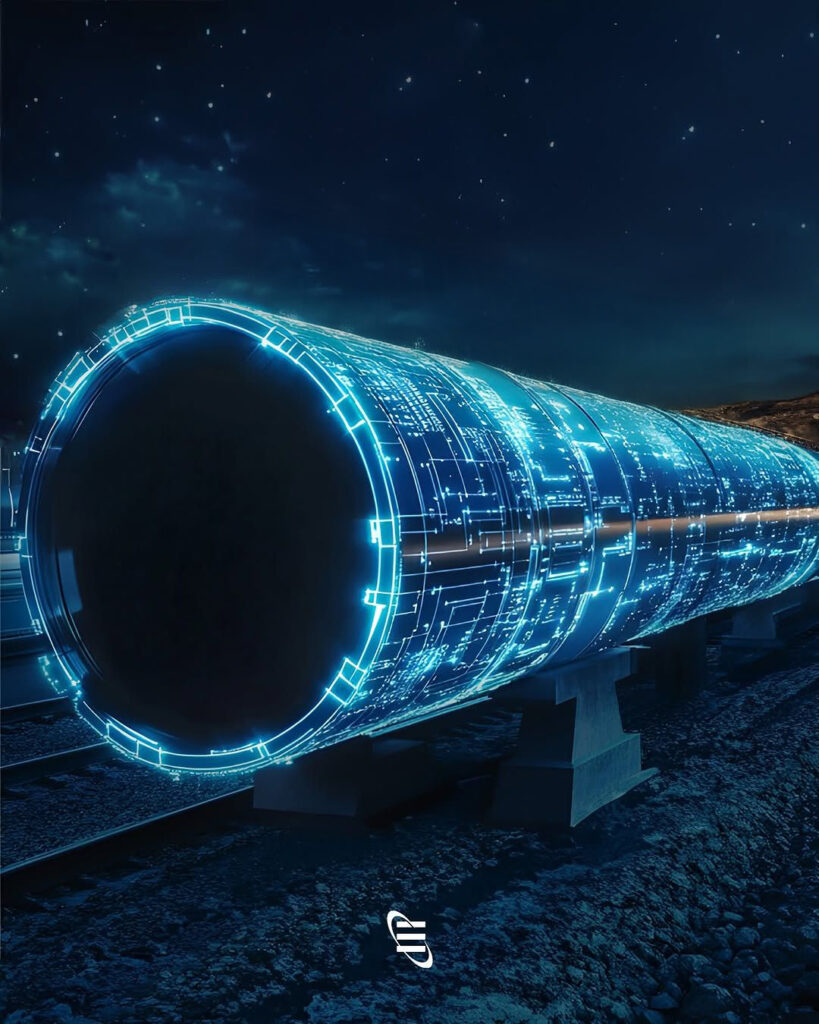
Hardware Realities:
Even high-quality sensors can quickly become obscured by debris and biological growth, requiring innovative solutions like automated compressed-air sparging to keep sensor tips clean.
Modeling and Prediction:
By leveraging historical data on flows, weather, and nutrient concentrations, experts can utilize neural networks to predict system performance for up to 12 hours in advance.
Handling Seasonality:
AI models, such as those trained on rain and temperature data, can effectively capture complex patterns like snowmelt events, which significantly dilute concentrations in urban sewer systems.
AI in Asset Management: Predicting Infrastructure Failure
Beyond treatment processes, AI is revolutionizing how we maintain aging infrastructure. In cities like Montreal, municipalities have utilized machine learning to optimize the replacement of water pipes, tackling the pervasive issue of frequent pipe breaks. By analyzing historical failure data and asset characteristics, AI models can prioritize maintenance schedules far more efficiently than traditional methods. Furthermore, the rise of Large Language Models (LLMs) is allowing utility managers to interact with complex asset databases using natural language, enabling rapid decision-making in the field, such as mapping high-risk pipes within seconds of a query.
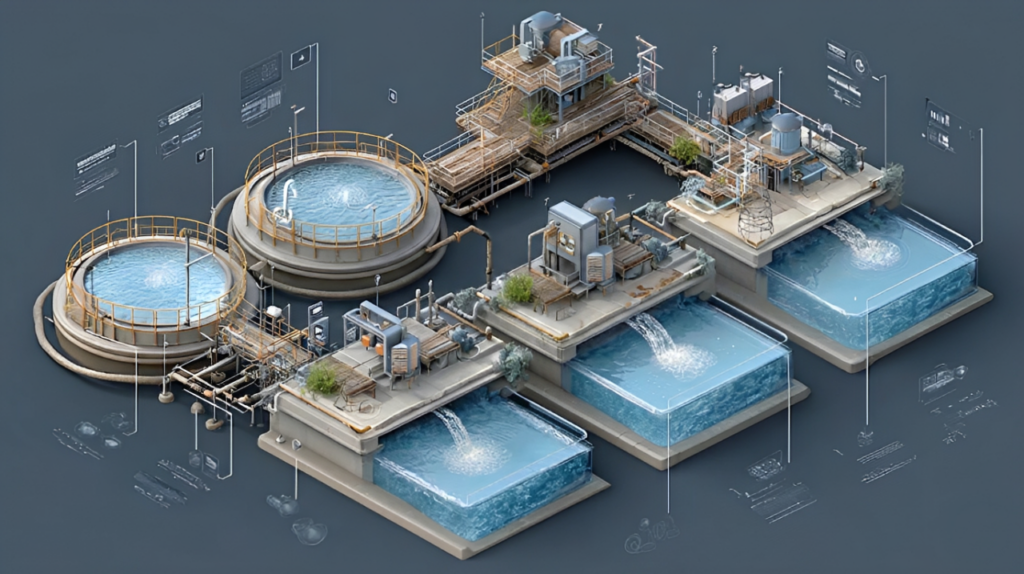
Knowledge-Driven Machine Learning: Bridging Theory & Data
While pure data-driven models have their place, the integration of physical and chemical domain knowledge, often called “knowledge-driven machine learning,” is proving to be a game-changer for specialized processes like membrane filtration.
Overcoming Data Scarcity:
Many environmental datasets, such as those documenting micro-pollutant rejection, are relatively small (around 2,400 points). AI can supplement this by incorporating known physical mechanisms, such as size exclusion and donor-acceptor interactions, ensuring models remain grounded in scientific reality.
Hybrid Modeling:
By combining the predictive power of XGBoost or LLMs with established engineering principles, researchers are creating models that do not just provide a number but explain the underlying mechanisms of water treatment.
The Human Element: Skills and Future Collaboration
A recurring theme throughout this transformation is that AI is not a replacement for human expertise but a sophisticated tool to augment it. For students and professionals looking to enter this field, the path involves a blend of traditional engineering knowledge and modern data skills.
Collaboration:
Successful projects rely on diverse teams that bring together environmental engineers, data scientists, and biologists.
Learning Curve:
The barriers to entry are lower than ever, with abundant online resources for learning Python and other coding tools. The key is to start small, experiment with pilot projects, and maintain a critical, stepwise approach. It is within seconds of a query.

Case Studies
The following case studies highlight effective applications of artificial intelligence (AI) in tackling urgent global water management issues, showcasing notable gains in resilience, sustainability, and efficiency.
Barcelona’s Smart Water Management System (Spain):
In the past, urbanization caused a 25% rise in water consumption, and inefficiencies cost the city 30% of its water supply. To meet the growing water demand, Barcelona installed an AI-powered smart water management system in 2018. To maximize water distribution, the system makes use of predictive analytics and real-time monitoring. Within two years, customer engagement improved thanks to data-driven insights, water losses decreased by 15%, and water supply efficiency rose by 20%.
Los Angeles’s AI-Powered Leak Detection System (US):
Due to outdated water infrastructure, Los Angeles used to experience a 25% water loss. To address water leaks, Los Angeles installed an AI-powered leak-detection system in 2019. To find leaks early, the system makes use of sensors and machine learning techniques. Predictive maintenance led to a 25% reduction in water loss, a 30% reduction in infrastructure damage, and an improvement in maintenance schedule within two years.

Drought Management System (Jordan):
Ten million people in Jordan used to suffer from severe droughts. In order to lessen the effects of the drought, Jordan installed an AI-driven drought management system in 2020. To forecast drought threats, the system examines data on soil moisture, reservoir levels, and weather trends.
Shanghai’s Water-Efficient Data Center (China):
In the past, data centers in Shanghai, China, consumed a large amount of water for cooling and 10% of the city’s electricity. In 2020, Shanghai addressed the energy-water nexus by implementing an AI-powered water-efficient data center. The technology minimizes energy use while optimizing water use for cooling. Water and energy use decreased by 20% and 15%, respectively, in a year.
Egypt’s Nile Delta Precision Irrigation System:
In the past, inefficiencies caused the Nile Delta to lose 30% of its agricultural water. In order to maximize agricultural water management and lower energy usage, the Nile Delta installed a precision irrigation system driven by artificial intelligence in 2020. Crop yields rose by 20%, water consumption decreased by 25%, and pumping and distribution energy use decreased in just 1.5 years. Conclusion
Dubai’s Smart Water Quality Monitoring System (UAE):
3.3 million people lived in Dubai, UAE, which used to have 25% water contamination from industrial and agricultural runoff. In order to combat pollution and urban water management, Dubai installed an AI-powered smart water quality monitoring system in 2020. To identify contaminants, the system makes use of sensors and machine learning techniques. Public health protection increased and water pollution decreased by 22% in just 1.5 years. Crop yields rose by 15%, and water use during droughts decreased by 20% in just 1.5 years.
Conclusion
As we look to the sustainable future, the integration of AI into the water sector offers immense potential to enhance efficiency, prevent infrastructure failure, and protect our most valuable resource. The expert consensus is clear: proceed with a mindset of “under-promising and over-delivering.” By combining rigorous scientific knowledge with the flexibility of data-driven modeling, we can ensure that these digital tools are used not just as a “hammer for every nail,” but as a precise instrument for building a sustainable water future. In a world where infrastructure demands are constantly increasing, the ability to maintain uninterrupted flow is a competitive advantage. AI is not just helping to prevent blockages; it is redefining how systems operate at their core.
To explore the latest innovations in water and energy technologies and discover a wide range of products and solutions from around the world, you can visit the virtual exhibition AQUA ENERGY EXPO, which features leading companies in water treatment, desalination, and sustainable energy, through the following link:
https://aquaenergyexpo.com/

