
Biological Filtration: A Sustainable Solution for Drinking Water Treatment Challenges

As global populations expand and urbanization accelerates, ensuring access to safe and clean drinking water has become one of the most critical global challenges. The growing demand for potable water, combined with the degradation of natural sources, is pushing utilities and industries to seek more advanced and sustainable treatment technologies.
Limitations of Conventional Treatment
Traditional water treatment methods such as chlorination and chemical oxidation are effective for basic disinfection but have notable limitations. They often involve high operational and maintenance costs, generate harmful disinfection by-products, and are less effective in removing pollutants like ammonia, organic matter, and dissolved nutrients. These drawbacks have increased the need for more sustainable, efficient, and cost-effective alternatives.
The Rise of Biological Filtration
Biological filtration (biofiltration) has emerged as a powerful solution to these challenges. This process uses naturally occurring microorganisms that grow on a filter medium to break down organic matter, convert ammonia into less harmful compounds, and reduce turbidity all without relying heavily on chemicals. The result is cleaner, safer water produced through a natural, biological process that supports both water quality and environmental sustainability.
Filtralite® Pure: Redefining Drinking Water Filtration
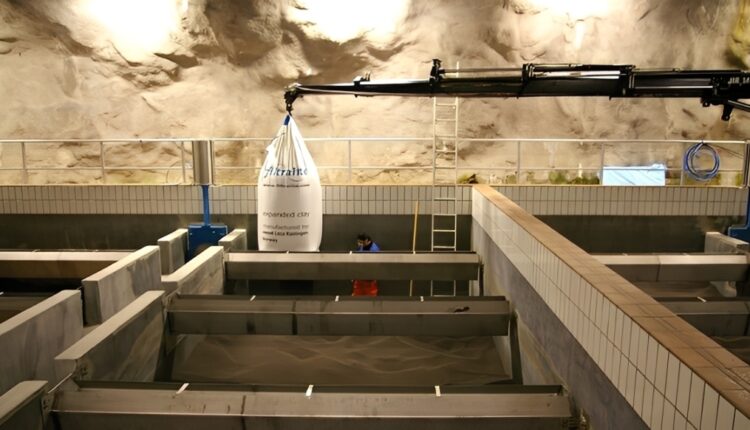
At the forefront of this innovation is Filtralite® Pure, a specialized biofiltration media developed by Filtralite®, a leading European brand known for high-performance filtration solutions. Made from expanded clay aggregates, Filtralite® Pure combines lightweight structure, exceptional porosity, and long-term durability, creating an ideal environment for biofilm growth and efficient pollutant removal.
Filtralite® Pure is designed specifically for drinking water treatment and desalination applications, providing stable performance, longer filter runs, and reduced backwash frequency compared to conventional sand or anthracite filters.

“Filtralite® media are produced in several grades and particle sizes to suit different treatment goals. From lightweight, highly porous NC grades ideal for biological filtration, to denser HC types designed for deeper and faster filtration, each variant ensures reliable performance and adaptability to diverse water qualities”.
Case Study: Filtralite® Core Biofiltration at Putatan II Drinking Water Treatment Plant
Project Overview
Located in Metro Manila, the Putatan II Drinking Water Treatment Plant was developed to supply safe and reliable drinking water to over one million residents. With a production capacity of 150,000 m³ per day, the facility plays a crucial role in addressing the region’s growing water needs.
The plant sources its water from Laguna de Bay, a highly polluted lake affected by urban runoff, industrial effluents, and agricultural discharge. This raw water poses major challenges, including high turbidity, elevated ammonia concentrations (up to 7 mg/L), and occasional salinity.

Design Challenges and Requirements
Key constraints included limited land, highly variable raw water quality, and the need for a stable, low-chemical process.
To meet these demands, engineers selected an aerated biological filtration (BAF) system incorporating Filtralite® HR 3–6, part of the Filtralite® Core range. This media was chosen for its exceptional porosity, mechanical strength, and proven capability in ammonia and organic removal.
Treatment Process
The treatment line combines several advanced processes to ensure high-quality output:
- Screening: removal of large solids
- Pre-coagulation and flocculation: aggregation of fine particles
- Dissolved Air Flotation (DAF): separation of suspended matter
- Post-DAF Coagulation: additional clarification
- Aerated Biological Filtration (BAF): key stage using Filtralite® media for ammonia and organic removal
- Ultrafiltration and Reverse Osmosis: polishing and salinity control
- Final Disinfection: ensuring microbiological safety

The BAF unit includes 14 biofilters (12 operating + 2 standby) running in an upflow configuration with a hydraulic loading rate of 10.5 m/h, reaching 12 m/h during backwashing providing compact design and superior performance compared to conventional sand filters.
Performance and Results
Using Filtralite® HR 3–6, the Putatan II plant achieved outstanding operational results:
- Ammonia Removal: Effluent levels consistently below 0.1 mg/L (≈90% removal).
- Organic Matter and Solids Reduction: Influent BOD (6–10 mg/L) and TSS (~100 mg/L) reduced to below 2 mg/L and 5 mg/L, respectively.
- Operational Benefits: Lower chlorine demand, reduced OPEX, and minimized formation of harmful by-products.
- Sustainability Impact
By adopting Filtralite® Core biofiltration technology, the Putatan II plant demonstrated how sustainable filtration solutions can deliver both high efficiency and environmental responsibility.
The use of Filtralite® Pure and Core media enabled a high-capacity system within a limited footprint, while reducing energy and chemical consumption making it a model for future eco-efficient drinking water treatment plants worldwide.

Conclusion
The pressing challenges of water scarcity and pollution highlight the urgent need for innovative treatment solutions. Traditional methods often struggle with high operational costs and inefficiencies in removing specific contaminants.
The Putatan II Drinking Water Treatment Plant exemplifies the advantages of biological filtration using Filtralite® Pure media. This advanced system effectively addressed the complexities of polluted raw water from Laguna de Bay, achieving impressive reductions in ammonia and organic matter. With ammonia levels consistently below 0.1 mg/L and significant decreases in BOD and TSS, the plant demonstrates the effectiveness of biological filtration in producing high-quality drinking water.
Additionally, the operational benefits, such as reduced chlorine demand and lower costs, underscore the economic viability of this technology. By minimizing chemical usage and energy consumption, Filtralite® Pure not only enhances water quality but also promotes environmental sustainability, serving as a model for future water treatment initiatives worldwide.
Mohammed Kastawy
Area Sales Manager – MENA Region
 Mobile: +971565503535
Email : mohammed.kastawy@saint-gobain.com
LinkedIn: www.linkedin.com

